

Timbba: the operating system for the timber trade
Timber is bought by the vessel and sold by the cubic foot, and most of the money is lost in between: logs short at the port, mill variation nobody can prove, stock known only at month end. Timbba puts every log and every piece on record — gate, mill, stock, orders and dispatch — on a phone app for the yard and a web admin for the office.
What stood in the way
Logs short between port and yard
One buyer ordered 1,000 CBM and received 850 — with no record to claim the shortage.
Non-tally logs disappear quietly
Logs that don't match the supplier's list are never counted, so nobody can say where they went.
Mill variation nobody can prove
Purchase figures against what the saw measured — per log, machine and operator — kept in books, if at all.
Stock known a month late
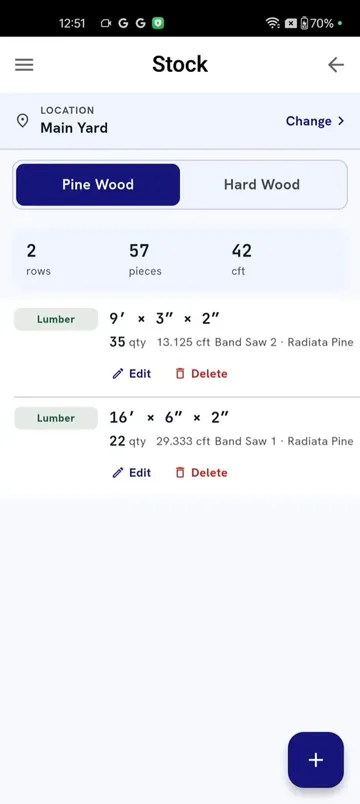
Stock kept in books meant knowing the position only at month end, with wrong entries along the way.
Reports days after the work
Outside scanning teams sent gate reports a day or two later, too late to act on.
Dispatch without a paper trail
Lorries leaving without a challan the gate can check, and stock that never comes down.
How it is built
- GateBarcode scan per loggate pass and e-way per lorrytally and non-tally known
- MillPurchase figures prefilledmill measures its ownvariation per machine and grade
- StockPublished statementsadjustments and loadingsrecovery per period
- OrdersBy dimension or volumequeue with readinessproduction at the mills
- Loading & challanGenerate deducts stockcancel restores itgate scans the challan
What it does, screen by screen
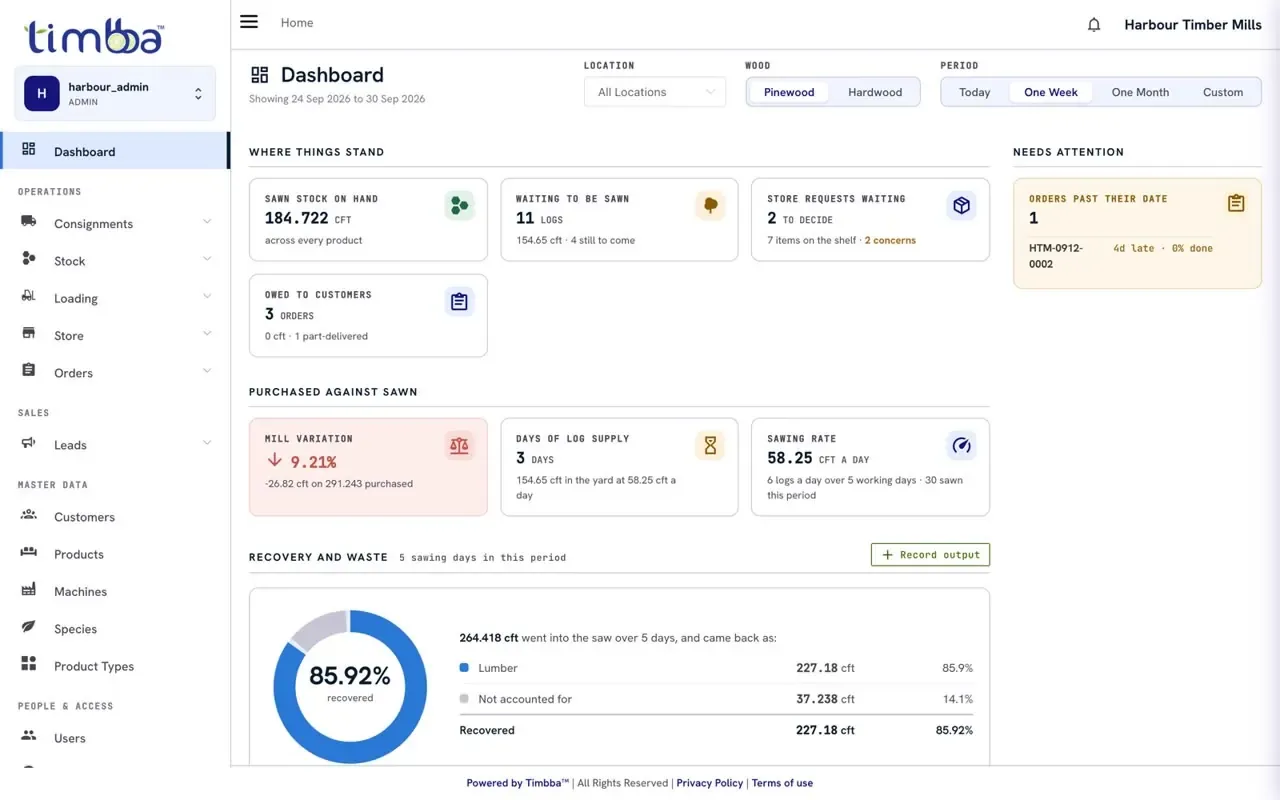
Open it in the morning; know what needs you
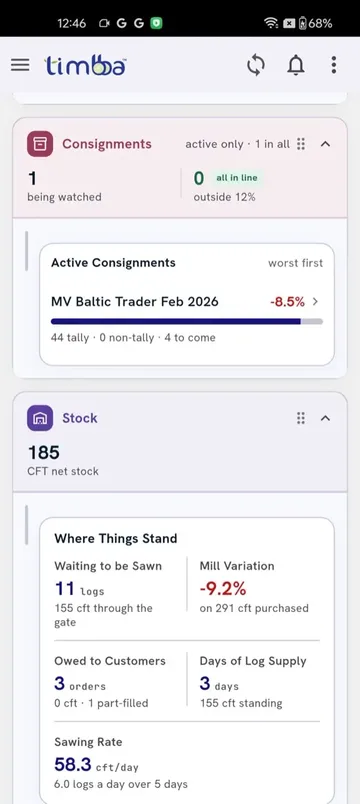
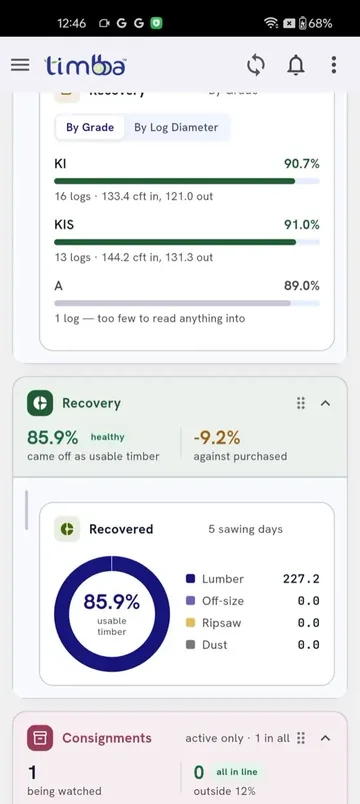
Not a wall of charts — a short list of what is out of line: orders past their date, logs unsawn for 90 days, store requests waiting. Then the operating figures: stock on hand, days of log supply, sawing rate, recovery and waste.
- By wood, by location, by period
- The same figures on web and phone
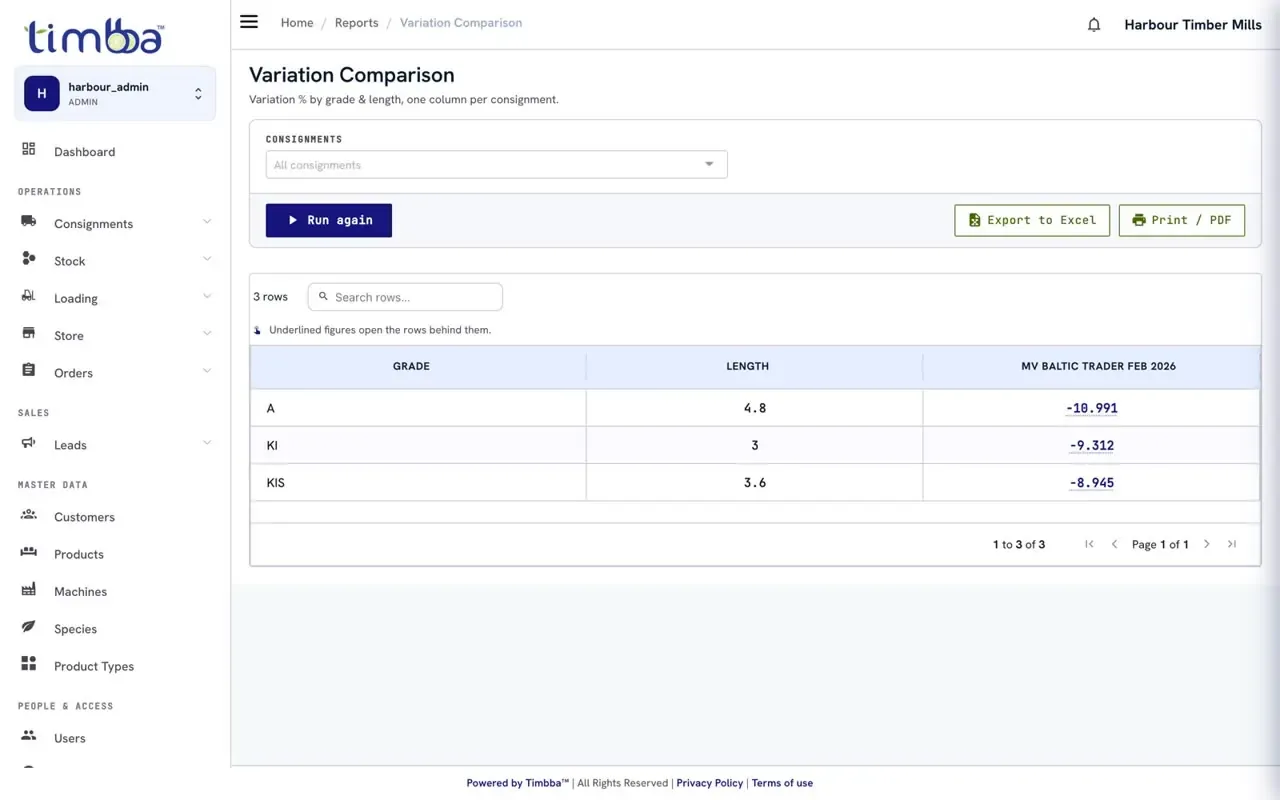
Measure at the saw, compare to what you paid for
The operator scans the log at the mill. Purchase figures come up prefilled; the mill records its own length and girth. Variation is booked against machine, grade and consignment — so it is finally provable.
- Per-machine variation
- Non-tally logs tracked and merged later
- Logs resold as logs recorded as resale
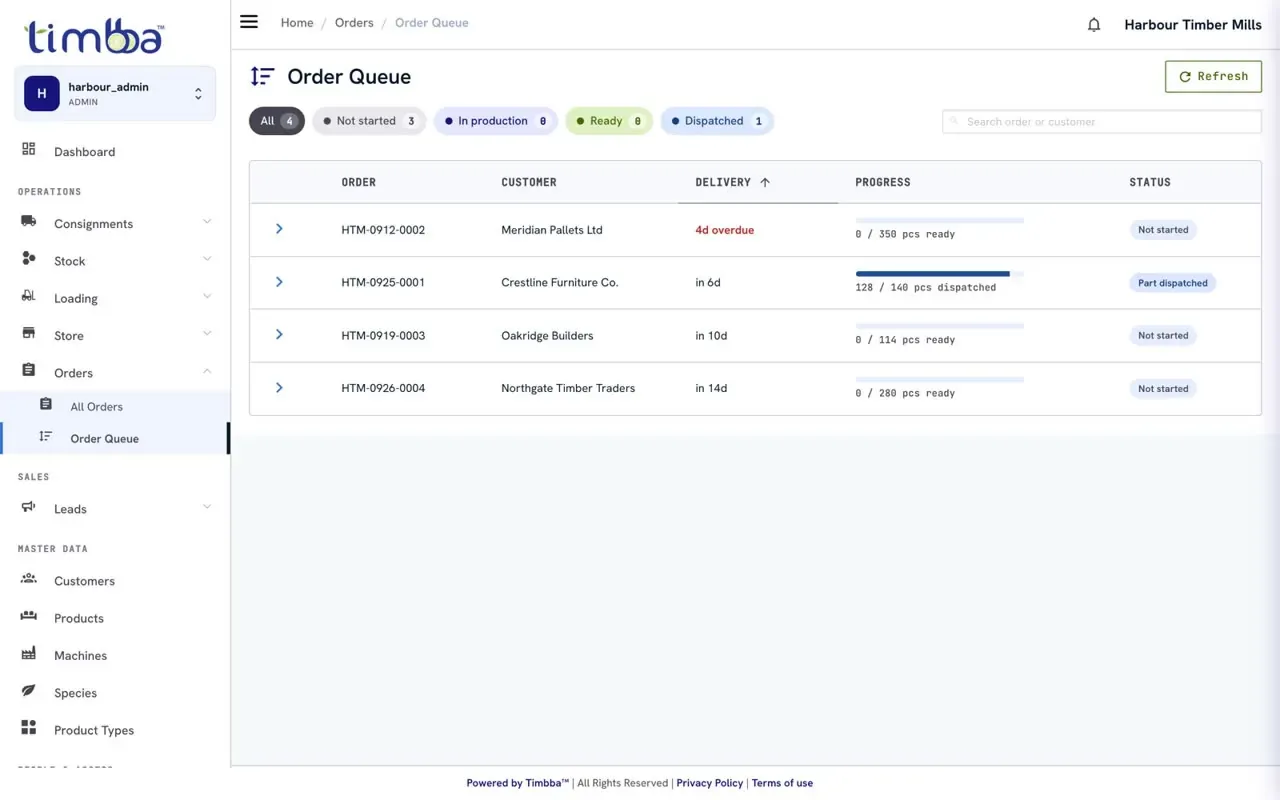
Sell what you have, saw what you sold
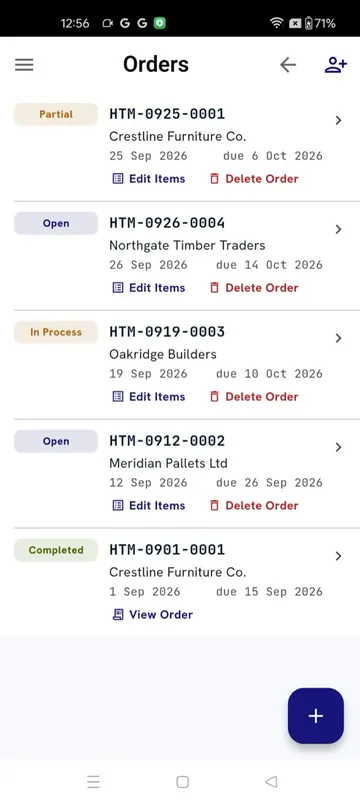
Orders by dimension or by volume, in the customer's units. The queue shows delivery dates, what is ready and what is overdue, so the day's sawing is cut against demand.
- Part-deliveries tracked line by line
- Loading picks lines from the order, capped at what remains
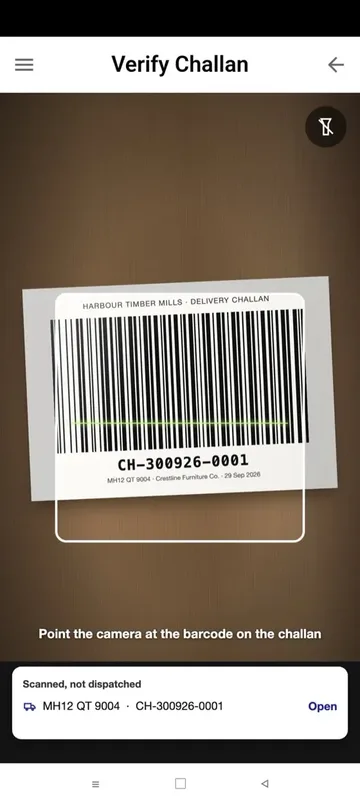
Nothing leaves without a challan
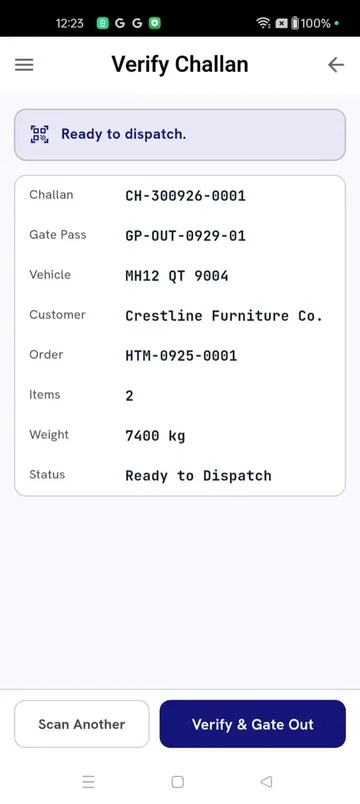
A loading batch is a draft until its challan is generated. Generating deducts stock; cancelling restores it. The gate scans the challan's barcode before the lorry moves.
- Vehicle weight and per-product volume on every batch
- Gate pass and challan numbering per client
Switch on what the yard needs
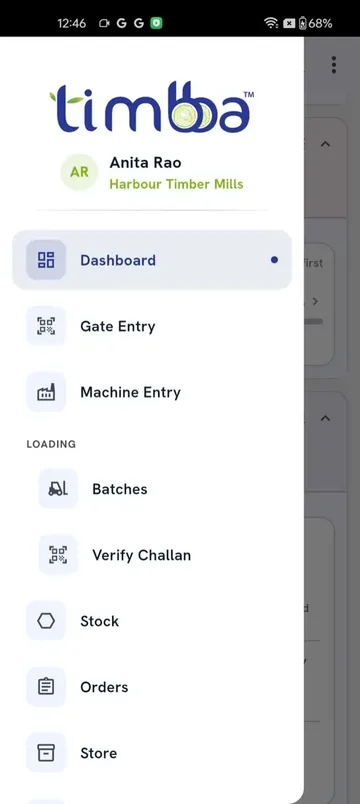
Licensed per client. Roles exist only for the modules you have; menus appear only for the roles a person holds.
Consignments
Import the supplier's list; watch tally against purchased per vessel.
Gate entry
Barcode log scanning per lorry with gate pass, e-way and location.
Machine entry
Mill measurements against purchase; variation and recovery per log.
Stock
Published statements, adjustments, net stock, production and recovery.
Orders
By dimension or volume; a queue with readiness and overdue flags.
Loading & challan
Batches become challans; generate deducts, cancel restores.
Store
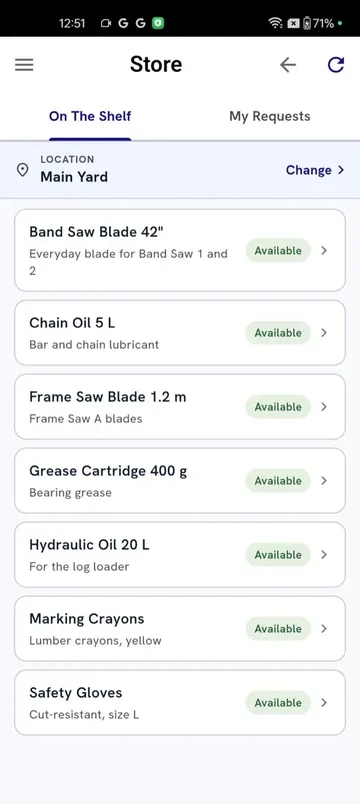
Blades, oil and gloves on a ledger: request, approve, issue, cost.
Reports
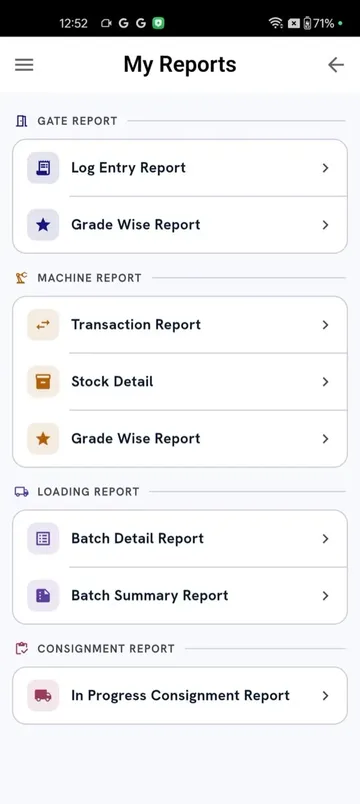
Fifty reports across gate, machine, stock, loading, orders and store.
Dashboard
What needs attention, purchased against sawn, recovery and waste.
Users & roles
Wood, work and access roles; machines per operator; device-bound phones.
Multiple yards
Each location keeps its own stock, machines and store.
Sales leads
Enquiries, products on offer and a customer book for sales.
Built for a gate in the sun and a mill floor in the noise
Made for the gate
Big targets, one task per screen, a scan in a second or two — and scanning that carries on when the signal dips.
One phone, one person
Accounts are bound to a registered device; a new phone asks for approval first.
Same figures as the web
The office's numbers in the office's words on the phone. Nothing rounded differently.
Your units
CFT and CBM, board feet, running feet, JAS; feet or metres; currency set per client.
Pine and hardwood
Barcodes and SED for pine; quarter-girth, species and camp for hardwood — kept apart where it matters.
Cloud, secure, yours
Each client's data separate, every report exportable to Excel.
Timber businesses that stopped guessing
We ordered 1,000 CBM of logs and actually received 850 — now we get all of that on Timbba. Munshis can't change barcodes, replace logs or put the wrong girth, because Timbba identifies it immediately.
We received a shortage of 26 metres of logs from the port and found it was in non-tally logs. I claimed the shortage from the port.
Earlier we managed stock in books, so after a month we'd know how much we had. Now we know the exact stock in a day, and the leakage on the port is resolved.
Technology

See Timbba on your own consignment.
Send us a supplier's list and we'll show you the gate, the mill and the reports running on your logs — a 45-minute call, no hardware to buy.